

The Midlife (Slightly Unhinged) Guide to Growing on Socials Without Losing Your Sanity
The strategies we’re testing that are giving real results (and yes, you’ll thank me later).


There’s been a lot of talk lately about Instagram being “dead,” and honestly, I understand why. Screen time is going down. The appetite for consuming content just for the sake of consuming it has dropped off a cliff.
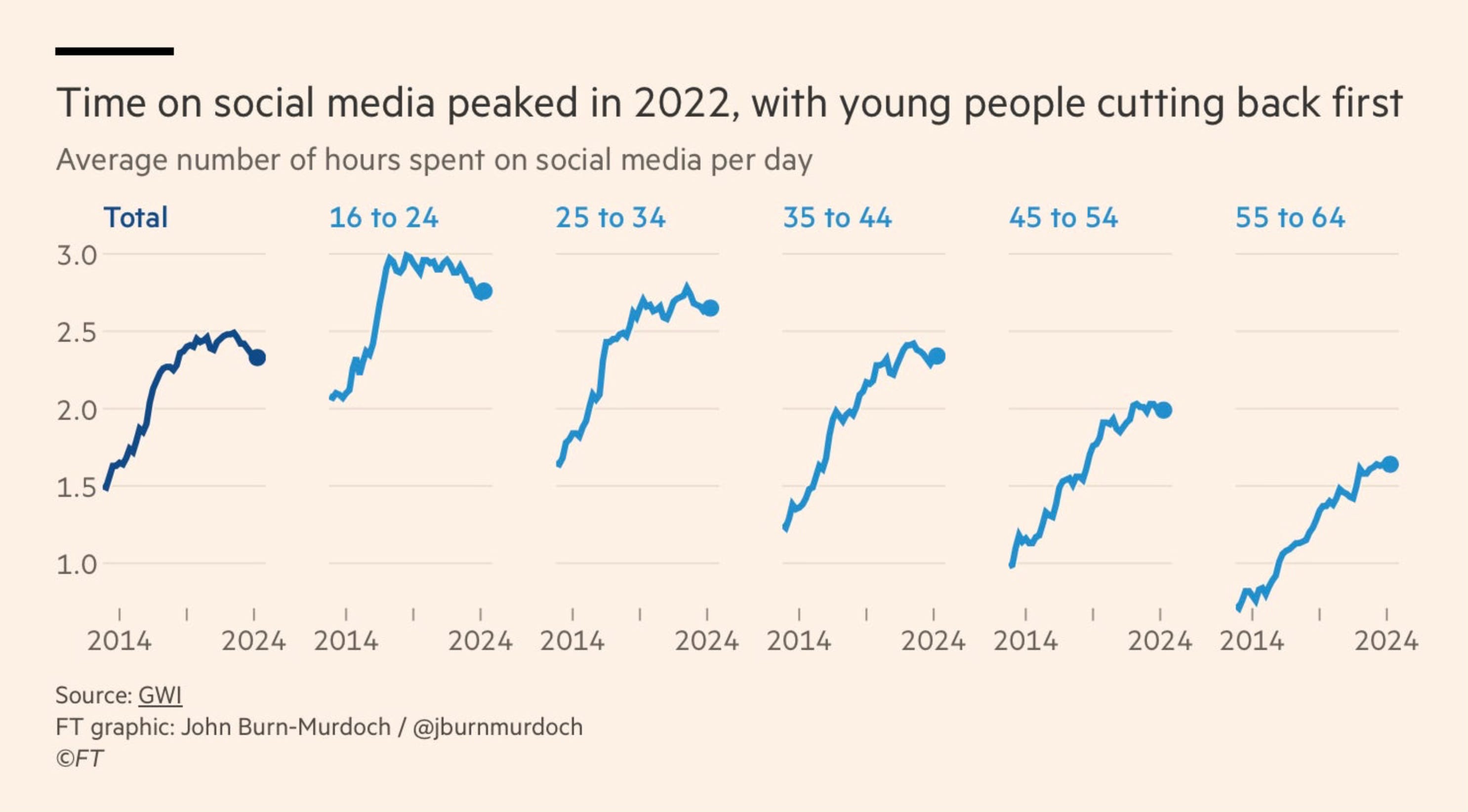
The pressure to be constantly visible doesn’t land the way it used to. Did I just hear you whisper… “thank Gawd?”
But Instagram isn’t dying. I think the way we were told to use it is dying.
The constant posting. The “be everywhere all the time” culture. The belief that the algorithm is the main character and we’re all just supporting actors.
The conversation I’m interested in is the one most people aren’t having: if the old way doesn’t work anymore, then what actually does?
Because the answer isn’t to disappear or burn everything down. No matter annoyed you feel about having to market and be on social media it’s part of building a business.
The answer is to shift. And inside SPF House, we’re in the unique position of watching that shift happen across multiple accounts, audiences, niches, and offers every single day.
Patterns show up faster. Trends are easier to spot. What’s working and what isn’t becomes obvious quickly.
Some of the things I’m doing in my own business are already paying off. Others are still unfolding. Some feel intuitive. Others surprised me. But none of what I’m sharing here is theoretical. It’s grounded in what we’re testing, tracking, and seeing inside real accounts with real goals and real sales attached to them.
So this is the conversation I want to have with you not about whether Instagram is dead, but about how the landscape has changed and what you can do to grow inside this new version of it.
Here’s what I’m doing and what we’re consistently seeing work inside SPF House even as the rest of the internet tries to figure out what’s going on with the algorithm:
1. I’m posting more when I feel like it… which also means posting less.
One thing I keep hearing from founders especially the women in the beauty & wellness space is that they’re tired of posting just to keep up. No one wants to “feed the algorithm” anymore. People can smell forced content a mile away, and honestly, they’re scrolling right past it. I call this broadcast content and it doesn’t convert.
What they do stop for are posts that feel intentional… the ones that make them tilt their head and think, “Okay, wait, she’s actually saying something here.”
And luckily, that’s exactly what the data is showing inside our clients’ accounts: fewer posts, deeper thought, better results. It’s almost rude how clear the pattern is.
This has definitely shaped how I show up. Maybe it’s the Europe effect, but I’m no longer interested in adding to the noise. I want the kind of post where, when it lands in your feed, you get that little jolt of, “Oh!! She posted…. I don’t want to miss this.”
Which does require slowing down. And thinking a little harder than your brain naturally wants to. And yes, sometimes taking a nap because apparently deep thinking is exhausting in midlife? Fun twist.
But slowing down doesn’t mean winging it. I’m not sitting around waiting for inspiration to descend from the heavens. And I don’t think you should either. Plan. Find your definition of consistency and stick to it.
2. I’m writing like someone who trusts what she knows.
One of the biggest shifts I’ve made and one I see working across every client account we manage is writing from what I actually know, not from what I think the internet wants to hear.
For years, I wrote like someone trying to earn her place. My voice was solid, but I wasn’t fully sold on my own goods yet.
Age and experience have a funny way of removing the training wheels.
At some point, you realize:
you know sh*t.
Not everything. Not in every niche. But in your lane? You’re not guessing.
You’re informed. You’ve lived it. You’ve built it. That counts for something.
Now, I write from lived expertise: what I’ve learned, what I’ve watched play out with clients for years, what I refuse to tolerate in my own business anymore, what I’m curious about, and what I genuinely believe is shifting in our industry.
I’m not trying to be impressive. I’m not trying to be the smartest voice in the room. I’m trying to tell the truth from the trenches, the kind of truth people actually want to read.
I also hold my own work to a much higher standard than I used to.
Before I post anything, I ask myself 2 questions and I honestly think they are the questions that everyone needs to ask themselves:
Would I stop to read this?
Does this actually interest me?
If the answer is no, it doesn’t go out until it is something that I would read. This alone has dramatically improved the quality of my content and, honestly, my self-respect as a writer.
And the data backs this up. The more robots try to take us over, the more people want to see people being human and writing with a humanity that they can relate too.
People don’t want polish. They want meaning. They want insight. They want a human who’s inside the work of building a brand, creating a product not someone recycling talking points for the algorithm.
It’s never been a better time to write like a human talking to other humans. Because work grounded in observation and experience gets saved, shared, discussed, and returned to. Every time.
3. I’m sticking to a schedule because structure is the kink no one talks about…
A lot of founders love the idea of posting “when it feels right” and trust me, I get the appeal. It feels like freedom …. until you realize it’s quietly bottlenecking the growth & income you actually want.
I resisted structure for a long time. Even thinking about a content schedule made me a little itchy, like someone was trying to put me in marketing jail.
But once I actually committed to a content schedule, it felt less like restriction and more like that Braveheart moment where he screams FREEEEDOOOOMMM.
Truly shocking. Turns out, structure isn’t suffocating, it’s stabilizing. It gives your creativity somewhere to land and your audience something reliable to hold on to.
So, yes…. I’m posting less than I used to, but I’m pouring more into every post and actually scheduling them. Sorry, am I confusing you??
"Being consistent is annoying but the data backs this up. Accounts that post with some kind of rhythm consistently outperform the ones relying on chaotic inspiration or last-minute “I should probably post something” energy. The biggest reason is that it build TRUST and trust is huge in the buyer’s journey.
We all roll our eyes at the consistency advice because it feels basic, and we hate that it works. But it does.
4. I’m experimenting like a toddler with finger paint.
One of the most surprising things we’ve seen inside SPF House is how much a “fresh start” can impact performance. If you’ve had the same account for years especially if your content has shifted, your audience has aged with you, or your niche has evolved then you might need a new account. Sometimes the algorithm is simply working off outdated signals.
It’s not personal; it’s just how the system categorizes your account.
We’re seeing this more and more with clients: when an account has been around forever, engagement often plateaus not because the content is bad, but because the audience no longer reflects who they’re speaking to now. In those rare cases, starting a new account can create cleaner data, faster alignment, and a more responsive audience. No emotional attachment, no old expectations, no years of mismatched followers clogging your reach.
That’s part of why I started a new Instagram for SPF House. I wanted a space that felt part strategic and part playground. A place where we could test storytelling, POV-driven content, and strategic creativity without the pressure of “this better go viral or I’ll die.”
Fresh eyes, fresh direction, fresh energy.
And yes, sometimes you really do have to go find new eyeballs. If your audience is no longer aligned with where your brand is heading, it’s okay to build a new one. My personal account and SPF House account work together now, but each serves a different purpose and because of that, the growth feels cleaner and more intentional.
Is it slower at first? Sure.
Is it worth it? Absolutely.
Sometimes the most strategic thing you can do is give yourself a true reset.
(Also… come follow us HERE. We’re having fun over there.)
5. I’m creating less for the imaginary crowd in the distance and more for the people who have already pulled up a chair.
One of the strangest things about the online world is how easy it is to get hypnotized by the numbers.
And when that happens, we start creating for this hazy crowd in the distance instead of the real human beings who are already here. It’s subtle, but it pulls your energy toward what could be instead of what is.
The numbers get louder than the humans behind them, and you can find yourself chasing growth without realizing you’ve stopped noticing the people who already said yes and more importantly, you’ve stopped being grateful for it.
At some point, it hit me how easy it is to forget what it actually means for someone to choose you not in theory, but in a very real, personal way like this right now (Thank you from the bottom of my heart btw) to choose your email or to subscribe to your Substack in their inbox.
I was thinking about “growth” in such an abstract way that I’d stopped noticing the actual humans who had already chosen me. When I really sat with that, it was humbling in the best possible way.
I know we all want growth but have you thought about the people that are there right now??Attention is not owed to any of us.
It is truly amazing and a gift that we get to show u with our products and services and talk about them o complete strangers. It’s wild really and I think we all forget this in the hustle.
The data backs this up. The accounts that deepen the relationship with their existing audience instead of chasing constant expansion convert better, retain longer, and build the kind of community that doesn’t evaporate when reach dips or algorithms change.
Growth is wonderful.
But attention true, voluntary attention is a gift.
6. I’m building wealth like a grown woman, not like a girlboss.
The older I get, the less tolerance I have for chaotic growth. In fact, my body utterly refuses the kind fueled by adrenaline, false urgency, or the hope of going viral just to feel relevant.
At this stage, I care far less about explosive moments and far more about structures that hold. Profit matters. Systems matter. Retention matters. My nervous system matters.
Inside SPF House, we see this pattern over and over again: brands that grow sustainably are the ones whose founders stop chasing spikes & fast wins and start building stability. They move away from “big launch energy” and toward predictable rhythms, clear offers, consistency, steady content cadence, and the kind of leadership that isn’t shaken by every dip in reach.
This is the kind of wealth I’m interested in now.
The kind that accumulates, not the kind that evaporates as quickly as it arrives. It feels mature, measured, and honest. It respects the life I’m building, not just the business I’m running.
I don’t have data on this yet but I can feel it and that accounts for something…
7. I stopped trying to be relatable and thank god, because I’m not.
Somewhere along the way, women were assigned this bizarre job description:
Be successful… but not too successful. Be visible… but not intimidating. Share your life… but only the parts that make people feel comfortable. Be relatable. Above all, be relatable.
Absolutely not.
I am not relatable. I am a 46-year-old ambitious woman who loves martinis, runs a strategy house, raises two teenage boys who treat my kitchen like a 24-hour diner, and lives with a Frenchie whose gastrointestinal choices should honestly be studied by NASA.
I am not interested in shrinking myself into a snack-sized version of what the internet finds palatable.
The weird part was when I stopped trying to “be relatable” I was much more relatable.
Turns out your “edges” the stuff you’ve been sanding down for years so people won’t side-eye you are actually the GPS signal that helps your people find you.
When you stop auditioning for universal appeal, your right-fit audience can finally recognize you in the wild.
Relatable is overrated.
Relatable is a marketing strategy for people who don’t trust their own identity yet.
You aren’t here to be everyone’s cup of tea.
You are here to be unmistakably, unapologetic which, ironically, is what people find the most relatable.
8. I’m speaking to the buyer I’ve become not the buyer I used to chase.
One of the biggest shifts happening in the online space right now is in the psychology of the buyer — especially in beauty and wellness. The women who are making decisions today are not the same women we were marketing to five years ago. They’re more informed, more emotionally literate, more pressed for time, and far less patient with fluff. They don’t want a performance. They want a point of view. They want someone who can help them make sense of the noise.
And I’ve realized that I am that buyer now. I am the woman who skims past tactics, ignores urgency, sees through gimmicks, and instantly clicks away from anything that feels like it was engineered for the masses instead of a real human being with a real life. I’m not building a highlight reel; I’m building a life and the women in my audience are doing the same.
So instead of chasing the broad, catch-all consumer, speak directly to the woman you’ve grown into. The one who is smart, discerning, emotionally awake, and deeply uninterested in surface-level strategies. The one who values clarity over charisma and depth over dopamine. The one who doesn’t need louder messaging… she needs sharper messaging.
This shift has changed everything inside SPF House.
When we write to her, conversions rise. Sales cycles shorten. Engagement deepens. Not because she’s “easy,” but because she’s aligned. She recognizes herself in the work. She moves differently when she feels understood rather than targeted.
When you speak to her directly with respect, intelligence, and actual expertise — the entire ecosystem of your business responds.
9. I started eating clarity (and more protein) for breakfast
You aren’t confused, you’re scared. You tell yourself you need more time, more research, more signs, more second opinions. But deep down? You already know exactly what you want. You’re just scared of what choosing it will require.
And that’s where most of us get stuck.
Not in confusion in avoidance but we tell ourselves we are confused bc that feels better.
Clarity isn’t a magical moment where everything becomes obvious. Clarity is a choice.
It’s the willingness to stop wobbling on decisions you already made. It’s the courage to call your fear what it is instead of dressing it up as “I’m still figuring it out.” It’s the discipline to trust your own knowing long enough to get actual data, instead of tapping out because the first 48 hours felt uncomfortable.
If you want to check in with yourself, try asking:
Where am I claiming confusion when I’m actually afraid of what happens if I choose?
What decision have I already made that I keep walking back?
What am I afraid I’ll lose if I stop being “uncertain”?
If I couldn’t use confusion as an excuse anymore, what would I do today?
What version of me am I avoiding stepping into? And why?
Most of the women in our world don’t have a clarity problem.
They have a self-permission problem.
They have a “staying small feels safer than being decisive” problem.
They have a “what if this actually works and then I have to hold it?” problem.
And when you realize that?
Everything starts moving faster — not because you suddenly have new information, but because you finally stopped negotiating with yourself.
Clarity isn’t something you wait for.
It’s something you choose.
And when you choose it, your entire business snaps into alignment with you.
10. I’m rewriting what “cool” looks like at this age.
I grew up believing that being “cool” meant being effortless, unbothered, detached that idealized aloofness we were all taught to emulate in our twenties.
But midlife has stripped all of that away. What feels cool to me now is something entirely different: intentionality, curiosity, emotional fluency, financial literacy, a well-fed nervous system, steady boundaries, and the ability to name what you want without shrinking.
Cool now feels like a woman who knows herself, who respects her time, who isn’t performing humility or pretending she doesn’t care. Cool is a woman who is fully here.
I don’t have data on this yet but it’s downloading…..
So no, Instagram isn’t dead.
The era of shallow content is dead.
The era of urgency is dead.
The era of performing is dead.
The era of pretending is dead.
What’s emerging is something deeper, quieter, more human, and honestly… far more aligned with the women we’re becoming.
And if that feels slightly unhinged, deeply liberating, and annoyingly grown-up?
Welcome.
I’m glad you’re here.